Newer Versus Older Pools in the Orlando Area: How Planning Questions Can Differ Before Renovation
A pool renovation rarely starts with plaster, tile, or color samples. It usually starts with questions, and the age of the pool changes those questions more than most homeowners expect.
Around Orlando, I’ve seen people approach two backyards with the same goal, “we want this pool to feel fresh again,” only to discover that the planning path is completely different. A newer pool may be structurally and cosmetically straightforward, but tied up in HOA rules, layout limitations, or accessory features that trigger separate permit questions. An older pool may look like a simple facelift at first glance, but the real conversation often shifts to existing conditions, site details, safety barriers, or whether the owner is resurfacing only or changing the pool in a bigger way.
That difference matters if you are considering an Orlando area pool renovation, whether you are looking at pool resurfacing Windermere FL, pool remodeling Dr. Phillips, a pool renovation Lake Nona project, or updating finishes in Oviedo or Sanford. The planning questions are not always dramatic, but they do shape budget, timeline, and stress level.
The first fork in the road is simple: refresh or modify
Before anyone debates color, coping, or tile, it helps to define what kind of project you are actually planning. In Florida code context, resurfacing the pool interior back to the original kind of nontoxic, slip resistant, smooth specification, or using equivalent equipment replacement, is not treated the same way as a broader modification. That distinction sounds technical, but it has a practical effect.
If a homeowner is mainly focused on surface wear, staining, roughness, or dated appearance, the conversation may center on whether the work is essentially pool resurfacing and like for like replacement. If the homeowner wants to move into redesign territory, adding features, changing adjacent elements, or combining several upgrades, the planning discussion usually expands.
That is where age starts to matter. Newer pools are often in better shape physically, so owners are more likely to think in terms of selective upgrades. Older pools often prompt a broader review because once one finish is at the end of its life, other decisions tend to come onto the table too.
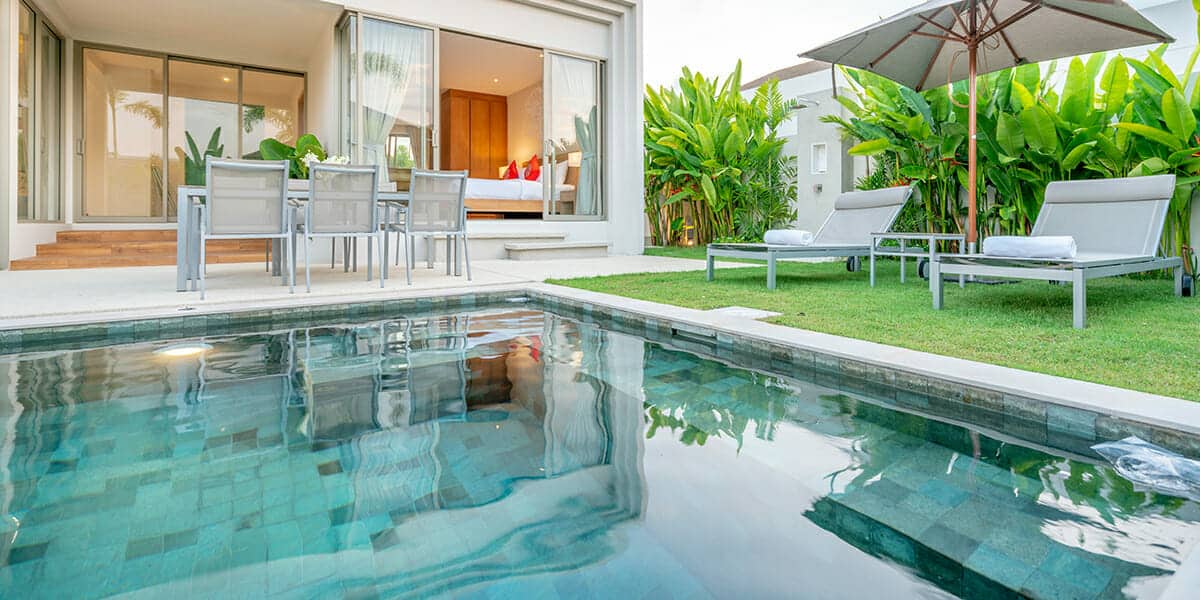
Older pools often bring more questions about what already exists
With an older pool, the smartest early questions are not always the glamorous ones. They are the questions about the site, documents, and current conditions.
For pool resurfacing Sanford FL or an older backyard renovation anywhere in the metro area, I would expect the planning conversation to dwell longer on what is there today. Orlando’s residential pool permit checklist makes clear that plans may need to account for existing conditions, distances to property lines, nearby improvements, easements, drainage, and erosion or sediment control. Those are not abstract permit buzzwords. They become real when a project touches older hardscape, long established landscaping, nearby structures, or lot conditions that may have changed over time.
An older pool can also come with a paper trail that is less tidy. The original survey may be old. The owner may not know where easements are. Yard features may have been added over the years without much thought to how they relate to a future renovation. Sometimes people assume the pool shell is the whole story, when the site plan ends up being just as important.
That does not mean an older pool is automatically a headache. It means the planning phase should be a little more patient. If the work goes beyond a cosmetic refresh, taking a careful look at the property layout can save time later.
Newer pools usually shift the conversation toward coordination
A newer pool in Lake Nona, Windermere, or other master planned communities can present a different kind of complexity. The shell may be fine. The deck may be in good shape. Equipment may not be old enough to raise immediate replacement concerns. Yet the project can still get slowed down by coordination issues.
This is where homeowners sometimes get surprised. They think a newer pool should be easier because there is less age related wear. Sometimes it is. But newer neighborhoods are also more likely to have active HOA oversight, tighter visual standards, and accessory features that need to be considered as part of the bigger package.
The City of Orlando notes that HOA approval may matter in addition to city rules. That point deserves more attention than it usually gets. I have seen owners focus on municipal permits first, only to realize later that their community has design review requirements about finishes, fencing, screens, or visible changes. HOA pool resurfacing questions often sound small at first, but they can affect timing. Waiting on a committee meeting or a review cycle can alter when work starts, especially if a family is hoping to line up renovation around school breaks or planned travel.
With newer pools, the planning conversation also tends to include upgrade bundling. People ask whether this is the right time to revisit tile, lighting, or surrounding features, because the pool is still functional but starting to look a little dated compared with newer design trends.
Cosmetic decisions are rarely just cosmetic
One of the most common mistakes in renovation planning is assuming finish choices are purely aesthetic. They are not. They affect sequencing, approvals, and whether the project stays in the lane of a straightforward refresh or drifts into a broader remodel.
Take pool tile design ideas. Tile sounds decorative, and it is, but it can also be the first sign that a homeowner is not simply resurfacing. The same goes for pool finishes Oviedo homeowners may be comparing, whether they want a subtle update or a noticeable shift in color pool remodeling in the Orlando area and feel. A finish decision can trigger questions about surrounding materials, waterline details, and how the new look fits the rest of the yard.
Lighting is another example. Pool lighting upgrades are a popular way to make an existing pool feel newer without changing the entire backyard. But once electrical work becomes part of the scope, planning should reflect that reality. Orlando’s checklist for a typical residential pool or spa project references building and electrical permits, and sometimes plumbing or gas depending on the work. That is why combining “small upgrades” is not always as simple as it sounds. Small upgrades can stack into a more coordinated project.

This does not mean homeowners should avoid combining work. Sometimes bundling improvements is the smart move. It just means the planning conversation should be honest about what the project really includes.
Permits tend to feel different in older and newer projects
The permit rules themselves are not split into “old pool” and “new pool” categories, but the way homeowners experience them often is.
Older pool projects tend to raise more questions about documenting the site properly. Orlando’s residential permitting requirements note that submittals should include a site plan or survey, and that homeowners doing their own work may need an Owner/Builder Declaration and, in certain cases, a recorded Notice of Commencement. If a property has been through years of incremental changes, getting everything clearly represented before work starts matters.

Newer pool projects, by contrast, often run into permit complexity because the owner wants to expand the scope in practical but varied ways. Orlando’s checklist notes that separate permits may be required for items like screen enclosures, gas piping, solar, and fencing. So the permit path for a newer pool can become more layered when the owner says, “Since we’re renovating, let’s also handle the enclosure,” or, “Now is the time to add a gas feature,” or, “Can we redo the fence too?”
That is not a problem so much as a planning reality. One permit is not always the whole story.
Safety requirements should not be treated as an afterthought
This is true whether the pool is twenty five years old or five years old. Orlando’s residential pool checklist includes safety barrier and gate requirements, and final inspections are tied to things such as the pool deck, pump, and child barrier. Orange County’s plan review checklist also points to barrier affirmations and notes that certain features may require separate permits instead of rolling into a single pool permit.
On older pools, safety questions often come up because existing gates, barriers, or surrounding elements may not be part of the owner’s mental picture of “the renovation,” even though they matter to final approval. On newer pools, the issue is more likely to arise when design changes interfere with or alter an existing barrier setup.
I’ve noticed that homeowners who discuss barrier compliance early have a smoother process emotionally. It is easier to adapt drawings and scope during planning than to have a nearly finished backyard waiting on one unresolved safety item.
Here are a few planning questions worth asking before design decisions get too far ahead:
- Is the work limited to resurfacing or equivalent replacement, or is it expanding into a broader remodel?
- Will the scope involve electrical, plumbing, or gas work in addition to finish updates?
- Are there HOA approvals that need to happen before municipal submittals or alongside them?
- Does the site plan clearly show property lines, nearby improvements, easements, and drainage considerations?
- Will any barrier, gate, fence, screen, or other accessory feature need separate attention or permitting?
That short set of questions can save a surprising amount of backtracking.
Older pools can reveal site issues that newer owners never had to think about
A lot of planning differences come down to the property itself. Orlando’s checklist specifically references drainage and erosion or sediment control. In Central Florida, that matters because the rainy season typically falls in the warm months, with frequent showers, thunderstorms, heat, and humidity. Those are not ideal conditions for every stage of outdoor construction.
For older pools, site drainage questions can become more visible because the backyard may have settled into patterns over time. Even without making assumptions about any one property, it is reasonable to say that years of landscaping changes, deck wear, and general use can make water movement around the pool more important to evaluate before renovation begins. If work affects surrounding surfaces, drainage should not be treated casually.
Newer pools are not immune to weather related planning. They just tend to face it from a scheduling standpoint instead of an existing conditions standpoint. A homeowner trying to line up a summer project in a newer neighborhood may be less worried about what the lot is doing and more worried about how afternoon storms, humidity, and shifting tropical weather affect the work calendar.
In Central Florida, that scheduling issue stretches longer than some people expect. Heat and humidity can continue well into early or mid October, and tropical systems can influence the transition out of the summer pattern. For practical planning, that means “we’ll just do it after summer” is not always as clean a strategy as it sounds.
Neighborhood type changes the renovation conversation
Pool remodeling Dr. Phillips often feels different from a pool renovation Lake Nona job, not because one area follows entirely separate laws in the broad sense, but because neighborhood character changes how homeowners frame the project.
In established areas, owners may focus on bringing an older pool back to comfortable, attractive use without overcomplicating the work. The discussion is often about making smart decisions, not chasing every possible upgrade. In newer communities, homeowners may be comparing their pool to recent builds nearby, which tends to create more pressure around style coordination, lighting, and contemporary finish choices.
That is one reason search terms like Altamonte Springs pool remodeling or pool finishes Oviedo often bring people into similar conversations for very different reasons. One owner may be solving wear. Another may be solving dated aesthetics. Another may be trying to align a renovation with HOA review and neighborhood expectations.
The right planning approach depends less on the ZIP code than on the pool’s age, the site, and the owner’s actual goal.
Budget pressure usually comes from scope creep, not from one big decision
People often brace for a single expensive surprise, but many renovation budgets drift because the project slowly changes category. A simple resurfacing plan becomes resurfacing plus tile. Then tile plus pool lighting upgrades. Then someone asks whether the screen enclosure should be redone now too. Then the fence becomes part of the conversation.
That progression happens with both older and newer pools. The difference is why it happens. On older pools, it often starts with necessity. On newer pools, it often starts with opportunity.
Neither reason is wrong. But they should be treated differently during planning. With an older pool, it is wise to decide what is essential to restore function, finish quality, and compliance, then weigh optional upgrades. With a newer pool, it helps to decide whether the owner is truly chasing a refresh or quietly building toward a larger redesign.
One practical habit helps a lot here: separate the “must do now” items from the “nice to do while we’re at it” items before permit and scheduling conversations get rolling.
When a resurfacing job stays simple, that can be a win
There is a tendency to romanticize major transformations, but a disciplined resurfacing project can be the smartest result, especially for a newer pool or for an older pool that still works well overall.
If the pool interior needs renewal and the owner likes the layout, there is nothing second rate about staying focused. Florida code context makes room for the idea that resurfacing back to original type standards or equivalent replacement is not the same thing as a broader modification. For some homeowners, that distinction is exactly what keeps the project manageable.
A restrained approach can also reduce the chance that a job grows into a chain reaction of approvals and added scopes. That matters for owners who want a clean project with fewer moving parts, especially in neighborhoods where HOA review or accessory permits can slow momentum.
A broader remodel can still make sense, especially if planned honestly
There are also times when trying to keep a project “simple” becomes artificial. If the owner already knows the goal includes updated finishes, refreshed tile, lighting changes, and other visible improvements, it is better to acknowledge that up front. A realistic plan usually beats a series of piecemeal add ons.
For an Orlando area pool renovation, I would rather see the full scope thought through at the beginning than watch a homeowner revisit the same yard in stages because the first plan was too timid to match the real objective. The important thing is not choosing the smallest project. It is choosing the clearest one.
That applies whether the homeowner is exploring pool resurfacing Windermere FL, a design refresh in Oviedo, or Altamonte Springs pool remodeling with a newer pool that simply needs a more current look.
The best planning question is not “how old is the pool?”
It is, “what kind of project are we truly starting?”
Age matters because it changes the likely planning issues. Older pools tend to demand closer attention to existing site conditions, documentation, and whether a simple surface renewal is realistic. Newer pools tend to invite scope expansion, HOA review, and coordination among several upgrade ideas that look small individually but become substantial together.
Once that is clear, the rest of the decisions get easier. Finish choices become more grounded. Permit conversations make more sense. Timing can be planned around Central Florida weather instead of guessed at. Safety items stop feeling like last minute obstacles. And the homeowner can choose between a focused refresh and a larger remodel with open eyes.
That is the real difference between older and newer pools before renovation. It is not just wear and age. It is the set of questions you need to ask before the work begins, and how honest answers shape everything that follows.